- Posted on
- admin
- No Comments
Skills and Training Paths for Teams Moving from VMware to Proxmox
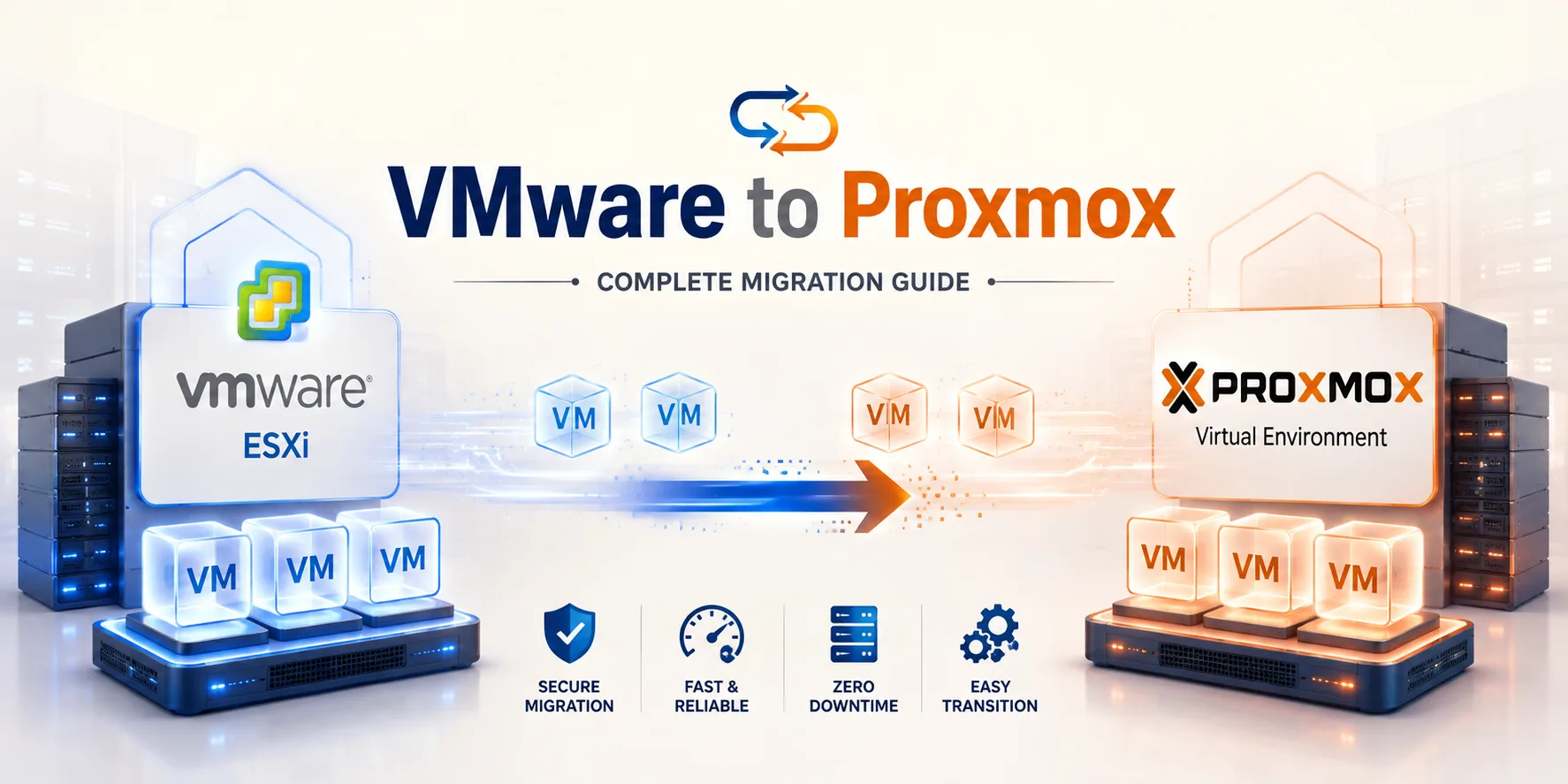
Course catalogs and corporate training calendars are quietly filling with a new request: “We need people who can run something other than VMware.” After Broadcom’s licensing changes, many organizations are evaluating Proxmox VE — and discovering that the blocker is not only budget approval, but skills. This article maps the learning path that fits platforms like CourseDrill’s world of courses, corporate training, and job-ready IT skills: what to study, how to practice in labs, and how training connects to a real migration program.
Why training belongs in the migration plan
A hypervisor migration fails in two common ways. The first is technical: bad inventory, missing VirtIO drivers, messy cutovers. The second is human: only one engineer understands the new platform, tickets pile up, and leadership loses confidence. Structured learning reduces both risks. When admins, NOC staff, and application owners share a vocabulary — clusters, bridges, backups, waves — the project stops depending on a single hero.
Treat training as a workstream beside discovery and pilots, not as an afterthought once production is already moving.
Core skill blocks to put on the syllabus
| Skill block | Why it matters on Proxmox | How to practice |
| Linux administration | Hosts are Debian-based; SSH and packages are daily tools | Lab VMs, package updates, journald, networking basics |
| KVM / QEMU concepts | Guests, VirtIO, CPU/memory models | Create Windows + Linux VMs; compare emulated vs VirtIO |
| Storage | ZFS, directory, NFS, Ceph options change capacity planning | Build thin pools; snapshot and restore drills |
| Networking | Linux bridges, VLANs, firewall paths | Mirror a simple prod VLAN layout in the lab |
| Backup & restore | Migration without restore tests is gambling | Schedule jobs; restore a full VM under time pressure |
| Change / ITSM habits | Waves need owners, windows, rollback | Write a mini change record for each lab cutover |
Notice how much of this overlaps classic networking and ITSM training — categories many course libraries already teach — rather than a single “Proxmox button” course.
Labs beat slideshows (self-hosted training environments)
Cloud lab products are useful, but teams leaving expensive hypervisors often want a durable practice environment they control. A small Proxmox cluster — even two nested nodes on spare hardware — becomes a permanent classroom: students clone golden images, break bridges on purpose, and restore from backup without burning public-cloud credits every semester.
That pattern mirrors what training teams looked for when evaluating alternatives to short-lived cloud lab services: repeatable environments, snapshots, and isolation between cohorts. Proxmox is not only a production target; it is an excellent teaching hypervisor for the same reason students need: fast clone, snapshot, reset.
A suggested learning sequence for corporate cohorts
- Week 1–2:Linux + networking refresh (bridges, VLANs, DNS/NTP dependencies).
- Week 3:Install Proxmox, create guests, install guest agent, practice snapshots.
- Week 4:Backup server or equivalent; prove a restore.
- Week 5:Conversion basics — import / virt-v2v concepts, VirtIO prep on a disposable Windows VM.
- Week 6:Run a mock wave: three VMs, dependency note, validation checklist, rollback story.
Graduates of that sequence can assist a production pilot instead of watching it. Managers should measure completion by the mock wave, not by attendance certificates alone.
Career angle: what belongs on a skills profile
For individual learners — career switchers, junior admins, cybersecurity students who already study data-centre practices — Proxmox experience is increasingly résumé-relevant. Pair it with whatever VMware exposure you have. Hiring managers want bilingual operators: people who understand why the business is leaving a licensed stack and how to keep SLAs during the move.
Concrete portfolio evidence beats buzzwords: a short write-up of your lab cluster, a restore drill timestamp, and a checklist you used for a mock migration. Job-support style mentoring (common in course marketplaces) works best when it reviews that evidence, not when it only drills interview trivia.
Soft skills that training often skips
Technical modules rarely teach the conversations that decide go/no-go:
- Explaining TCO to finance without jargon
- Negotiating change windows with application owners
- Writing validation criteria before the first disk converts
- Escalation paths when a wave fails mid-evening
Corporate training programs that add a half-day “stakeholder lab” — role-play a delayed database wave — produce calmer production nights than CLI-only bootcamps.
Connecting coursework to real delivery
Training builds capability; production estates still need a controlled delivery plan. Teams that combine internal upskilling with experienced cutover help usually finish faster than teams that choose only one path. A useful reference for how professional VMware to Proxmox migration work is structured — inventory, pilots, VirtIO preparation, batched cutovers — gives instructors and cohort leads a realistic picture of what “done” looks like outside the lab.
When the syllabus reaches day-2 operations (HA, patching, backup ownership), point learners at how a commercial vmware to proxmox migration service frames architecture, cutover ownership and handover. Even if your organization self-implements, the checklist language transfers cleanly into course modules and exam-style scenarios.
Curriculum ideas for instructors and training providers
- Module:“From ESXi mental models to KVM” — map familiar VMware objects to Proxmox equivalents.
- Module:“Windows on VirtIO” — the highest-friction guest topic in most classrooms.
- Module:“Backup literacy” — success rate metrics, immutability basics, restore SLAs.
- Capstone:Migrate a three-tier sample app with a scored rubric (documentation 30%, technical success 40%, communication 30%).
Providers already strong in networking, ITSM, or integration courses can extend those tracks instead of inventing an island “Proxmox diploma” with no operational context.
Study methods that actually stick
Passive video bingeing fails here the same way it fails for certifications. Prefer:
- Spaced labs (short daily labs beat one long weekend cram)
- Error journals (what broke, what fixed it)
- Peer review of runbooks
- Time-boxed restore drills
If your current study method is “watch another overview,” change it when you cannot restore a lab VM without notes. That signal matters more than another completed playlist.
For parents and early-career guidance (yes, it connects)
Education sites often speak to long-term career preparation. The infrastructure shift underway is part of that story: tomorrow’s admins will be expected to understand open hypervisors, not only one proprietary console. Encouraging home labs, Linux fluency, and responsible experimentation is practical guidance — the same theme as preparing learners for a tech-driven workplace, applied to the virtualization layer businesses actually pay for.
Closing
Moving off VMware is a finance story and a skills story. Course-oriented platforms are well placed to teach the second half: labs, networking, backup discipline, and change habits that make cutovers boring. Build a syllabus around practice, measure learners with a mock wave, and connect classroom checklists to real migration structure. Do that, and training stops being a soft line item — it becomes how the organization absorbs a platform change without drama.
Popular Courses