- Posted on
- admin
- No Comments
How Much Do Game Developers Earn in 2026
The gaming industry continues to expand in 2026 and is comparable to film and music in terms of revenue. Amid the growth of the audience and the number of releases, studios are posting openings more frequently, and teams are increasingly assembled like an assembly line, where speed and quality matter.
At the same time, competition for roles is intensifying. For employers, a developer is becoming not just an implementer, but someone with a rare combination of skills, from engineering discipline to understanding the player, which noticeably affects salary ranges and experience requirements.
The Technology Factor and the Mobile Growth Driver
New technologies, including VR and AR, are pushing demand for specialists who can work with non-standard interfaces, optimization, and a sense of presence. Such projects often require non-standard solutions, which means they are more labor-intensive and therefore cost more in terms of labor and salary expectations.
Separately, mobile gaming continues to grow. The smartphone remains the most widespread platform, so the need is increasing for developers familiar with hardware limitations, monetization, and frequent updates, when a product operates as a service rather than a one-time purchase.
The Game Developer Profession and the Scope of Tasks
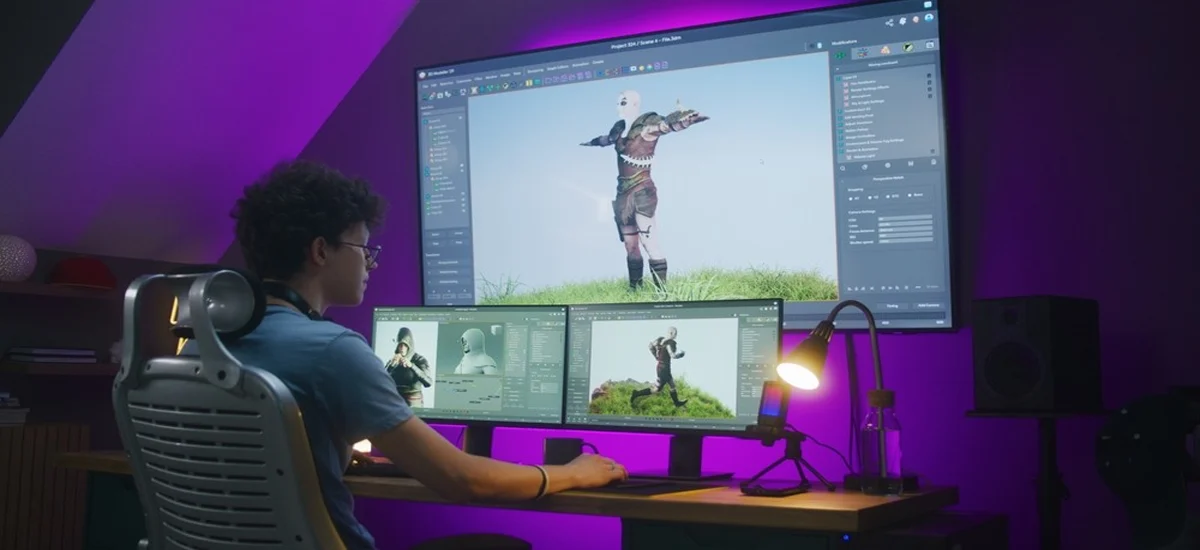
A game developer is a specialist who designs and assembles a video game from an idea to a working product.
Typical tasks are distributed across disciplines, but together they form a single production cycle:
- developing game mechanics and rules
- creating levels, scenes, and progression logic
- working with characters, animation, and visual effects
- integrating graphics and sound into the engine, setting up interactions
The work is almost always team-based, with constant coordination between code, art, and design. After release, developers often participate in testing, fixing bugs, and shipping updates, where stability and speed of response to issues are important.
Specializations on the Team and How They Affect Earnings
Income in game development depends noticeably on specialization, because the market values skill shortages and the cost of mistakes differently. For example, a failure in a multiplayer game’s networking code can cost more than an unsuccessful secondary visual effect, and this affects salary expectations.
The most typical set of roles on teams looks like this:
- a game designer is responsible for the concept, balance, rules, and user experience (UX)
- a programmer writes code and implements mechanics, physics, and artificial intelligence (AI)
- an artist and an animator create visual elements, models, and movement
- a sound designer creates music, effects, and voice-over
- a QA tester checks stability and bug reproducibility
- a project manager or producer coordinates schedules, budget, and communications
Salary Ranges by Platform and Why Budgets Matter
Salary estimates depend on the country and city, company size, experience, and specific responsibilities. Below are benchmarks that are more commonly found in public market reports and corporate pay bands.
In mobile development, the floor is often higher, but the spread across roles is significant. For entry-level specialists, a benchmark is around $70 000 per year, for mid-level specialists up to $100 000, for seniors $100 000 and above. Within the segment, examples include: a designer around $70 000, a programmer around $75 000, an artist from $50 000 to $70 000, a producer from $70 000 to $120 000.
High-budget development for consoles and PC is usually more complex and is backed by larger budgets, so ranges are often higher and closer to one another. In console projects, entry-level specialists can expect $60 000 to $80 000, mid-level $80 000 to $120 000, seniors $120 000 and above. For PC projects, comparable ranges are given: $60 000 to $80 000 for entry-level, $80 000 to $120 000 for mid-level, $120 000 and above for seniors.
Income Growth from Junior to Manager
Regardless of platform, the difference by seniority levels remains one of the main benchmarks. Junior most often falls into the range from $50 000 to $80 000 per year, mid-level from $70 000 to $120 000, senior from $120 000 to $180 000 and above.
A separate category is leads and team managers, where pay is tied to the scale of responsibility and project risks. For such roles, levels from $150 000 to $250 000 and above are often mentioned, especially when release timelines and cross-discipline work fall under their responsibility.
What Most Strongly Affects Salary Besides the Role
The list of factors is not exhaustive, but the key ones usually come up repeatedly across reports. Location affects it through the cost of living and the concentration of studios, and experience through the number of releases and the level of responsibility entrusted on the project.
Other variables are also often mentioned:
- education, where a relevant educational foundation can accelerate growth and expand the choice of openings
- company type, since big-name brands and studios with a reputation often pay more
- the project and the development stage, since AAA and later stages may pay more generously than the early phase of a small indie
Entering the Profession and the Employer Landscape
To start in game development, formal education and applied skills are usually combined. A degree in computer science, software engineering, and related fields provides a foundation in algorithms and architecture that will be useful for optimization and performance work.
In practice, specific tools and a tech stack are valued. Among languages, C++, Java, Python, and Unity Script are often mentioned, since they cover a wide range of tasks, from logic to integration. As engines and prototyping tools, Unity, Unreal Engine, and GameMaker Studio are usually cited, and a portfolio built with them becomes a common language for many teams.
Employers are more diverse than they may seem from the outside. In addition to game studios, developers are hired by tech companies with gaming products and advertising agencies, where interactive advertising and branded games are in demand. Employment formats vary from a full-time in-house role to freelance and contracts.
The iGaming Sector as a Starting Point and an Opportunity to Build a Career
Gambling game development is an attractive niche for an entry-level specialist. In this segment, the barrier to entry is lower than in the field of regular video game development, with a comparable level of salaries. In addition, it’s a mistake to think that work in this field is limited to creating generic slot games. Online casinos need tools to capture players’ attention, so many developers have focused on new mechanics.
As an example, the authors of informational sites from the top positions in search results often cite crash games such as Aviatrix, Lucky Jet, Aviator, JetX. They appeared only in 2022, but they didn’t just take off; they remain popular. This is confirmed by materials on the site https://indianaviatrix.com/, dedicated to the Aviatrix game. They make it clear that the number of online casinos offering crash games is only growing.
The same trend extends to new formats such as Plinko or Wheel of Fortune. Such tasks require actively bringing in a large number of developers, so there is no shortage of openings. Indian developers and specialists from other countries can expect openings at different skill levels.
Three Practices That Most Often Increase Income
The market regularly highlights three approaches that deliver a measurable effect in salary negotiations. Internships and a portfolio help accumulate verified experience faster, and case studies tied to shipped releases serve as proof of competence.
The second layer is industry events, where it is easier to track trends and understand which skills are becoming more valuable. The third practice is networking and specialization, since referrals reduce uncertainty for employers, and a focus on a narrow specialty, for example on networking code or monetization systems, increases the value of a profile.
From all of the above, a clear conclusion can be drawn that game development continues to remain a sought-after professional field. However, those who want to build their career in this field need to pay attention not only to video games or mobile games, but also to virtual gambling entertainment.
Popular Courses